Tradition · Korea
Hanbok: Parts, Colors and How to Wear It
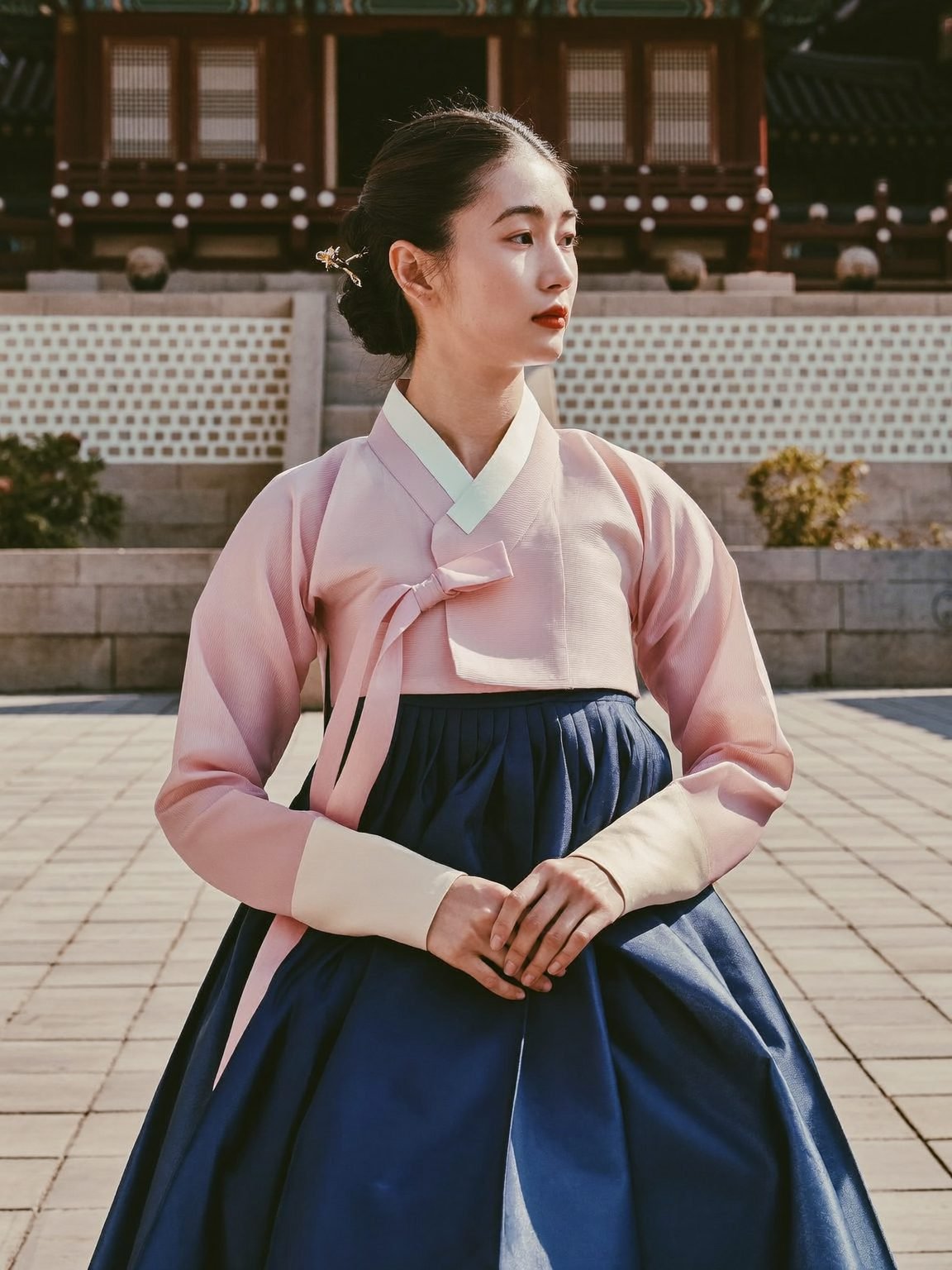
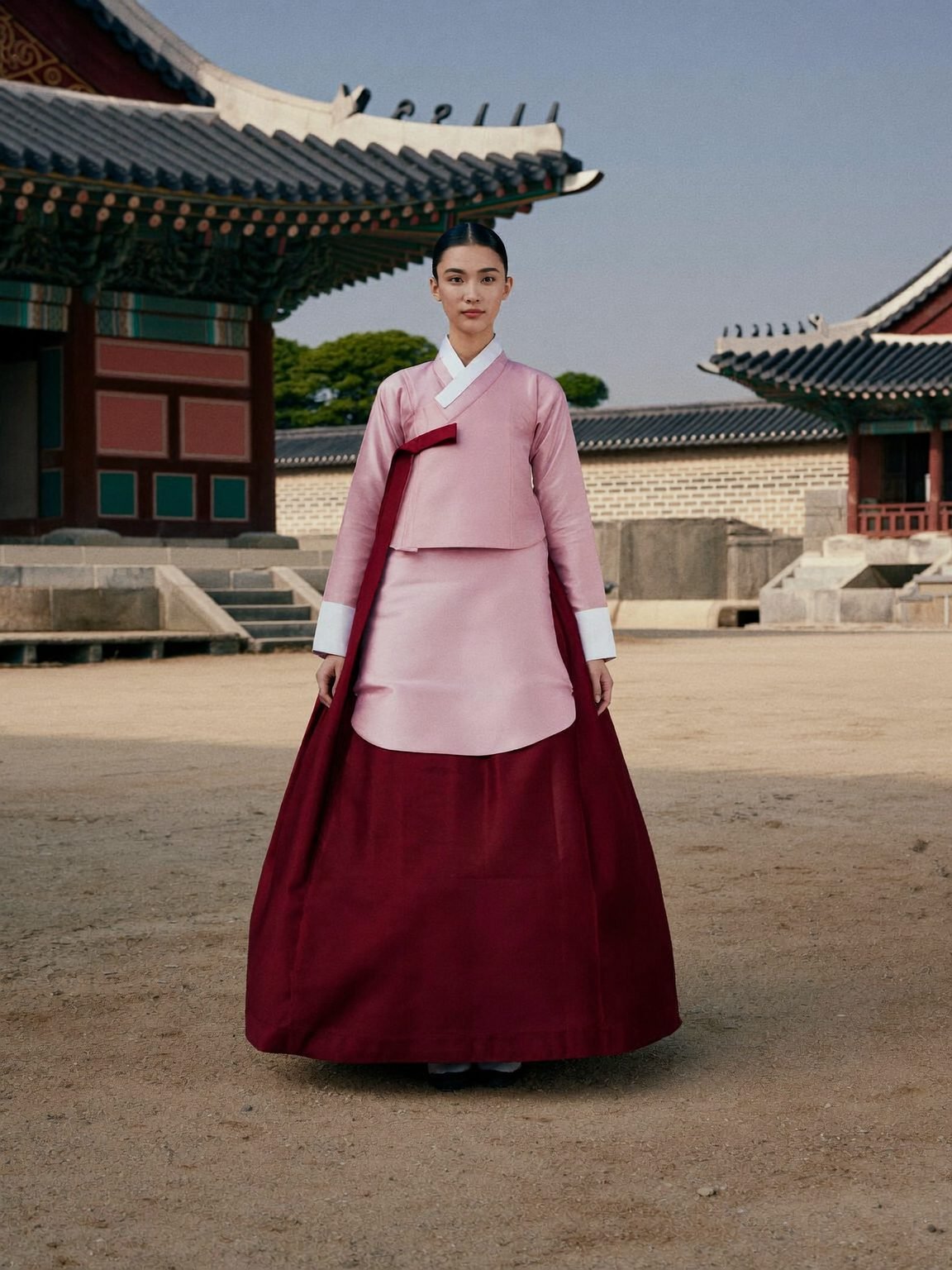
Hanbok is the traditional dress of Korea. A women's hanbok has two main parts: the jeogori, a short jacket tied with long ribbons called goreum, and the chima, a full, high-waisted wrap skirt. The shape is simple, but the colors are the heart of it.
More about Hanbok
What hanbok colors mean
Traditional hanbok colors come from obangsaek, the five cardinal colors of East Asian philosophy: blue (east), red (south), yellow (center), white (west) and black (north). Historically, colors also showed status and life stage: unmarried young women often wore a yellow jeogori with a red chima, and married women wore green and red. Children's hanbok often feature saekdong, bright multicolored stripes on the sleeves.
Wearing hanbok today
Koreans wear hanbok for weddings, a baby's first birthday (dol), and holidays like Seollal (Lunar New Year) and Chuseok. Modern everyday hanbok use lighter fabrics and softer pastels. Pair it with simple hair, a small norigae (a decorative tassel pendant) and soft pink or nude nails.
Hanbok: common questions
What are the parts of a hanbok?
For women, the jeogori (short jacket), the goreum (ribbons that tie it) and the chima (full skirt). Men wear the jeogori with baji (trousers).
What do hanbok colors mean?
Traditional colors follow obangsaek: blue, red, yellow, white and black, linked to the directions and the five elements. Red often stands for good fortune.
Can tourists wear hanbok?
Yes. Renting a hanbok to visit palaces in Seoul is popular and welcomed.